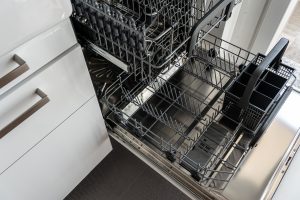
A dishwasher does a lot of the cleaning in the kitchen, but the machine itself still needs some attention from time to time. Food particles, detergent residue, and general buildup can collect around the filter, spray arms, door edges, and other areas that are easy to overlook.
For a long time, I assumed the dishwasher more or less cleaned itself every time it ran. It was only when I started checking the filter and the edges around the door that I realized how much can collect in places the normal cycle does not really reach. The good thing is that once you know which areas to check, cleaning the machine is actually pretty straightforward.
Start With an Empty Dishwasher
The easiest time to clean the dishwasher is when it is completely empty. Remove the dishes and take out any racks or accessories that are easy to lift out. This gives you a much better view of the bottom of the machine and makes it easier to spot anything that should not be there.
I usually start by checking the bottom because that is where I have found the most random things over time, from food crumbs to tiny bits of labels that have come loose from jars. Clearing those out first makes the rest of the job much easier.
Clean the Filter
The filter is one of the first places worth checking. Many dishwashers have a removable filter at the bottom, although the exact design varies, so it is a good idea to check the manual before taking anything apart.
Once removed, rinse the filter under warm water and use a soft brush or cloth to loosen any visible residue. If there is a lot of buildup, taking a little extra time here is usually worth it, especially since sharp tools or abrasive scrubbers can be too rough on fine mesh or plastic parts. I learned pretty quickly that leaving the filter too long only makes the job less pleasant later.
Wipe Around the Door and Seals
The inside edges of the dishwasher door are easy to overlook because they may not get much direct spray during a normal cycle. Wipe around the edges, handle area, and rubber seals with a damp cloth and a small amount of mild dish soap.
Residue can collect in corners and narrow grooves, especially near the bottom of the door. A soft toothbrush or cotton swab can help reach those smaller areas without being too abrasive. I usually notice the most buildup around the lower corners, where a quick clean can make the area look much tidier. Take a little extra care around the rubber seals and avoid pulling or stretching them while cleaning.
Take a Look at the Spray Arms
The spray arms are another area I check while the dishwasher is empty. Small particles can sometimes collect around the holes, especially over time.
If the arms are removable, follow the manufacturer’s instructions before taking them out. Rinse them and gently clean away anything visible with a soft brush. If something seems stuck inside one of the holes, avoid poking at it with a sharp object unless the manual specifically recommends doing that.
This is not a part I spend much time on. Most of the time, a quick look is enough to tell whether they actually need attention.
Wipe Down the Interior
Once the filter and door area are done, wipe the interior walls, racks, and any other areas where you can see residue. A clean damp cloth and a little mild dish soap are usually enough for small marks.
The area around the detergent dispenser is worth checking too. I have had detergent collect around the edges there before, especially after filling it too quickly. It only takes a minute to wipe away and keeps that part from getting sticky.
Run the Cleaning Cycle
Many newer dishwashers have a dedicated cleaning or maintenance cycle. If yours has one, this is usually the simplest way to finish the job.
Check the manual to see what the manufacturer recommends using with that cycle. Some machines call for a specific dishwasher cleaner, while others may only need an empty hot cycle. I would not automatically add vinegar, bleach, baking soda, or other household ingredients unless the manufacturer says they are suitable for your machine.
That is one area where I would rather keep things simple than experiment. Different dishwashers use different seals and materials, so the instructions for your own model matter more than a general cleaning trick.
Do Not Forget the Outside
The front of the dishwasher can collect fingerprints, water marks, and small splashes just like any other kitchen surface. Wipe the handle, control panel, and front with a soft cloth and a cleaner that is suitable for the finish.
If the dishwasher has a stainless steel front, check the care instructions before using anything strong. I normally put the cleaner on the cloth rather than spraying it directly onto the machine, especially near buttons and controls.
How Often Does It Need Cleaning?
There is no perfect schedule that works for every household. A dishwasher that runs every day will naturally need attention sooner than one that is only used a few times a week.
Rather than putting a fixed date on the calendar, I tend to check the filter and door area whenever I notice the machine looking a little less fresh inside. If there is visible residue, buildup, or an unpleasant smell, that is usually a good sign that it is time for a more complete clean.
A quick check every couple of weeks only takes a minute and can stop the job from becoming much bigger later.
Keep It Easier Between Cleans
A few small habits make a difference. Scrape larger pieces of food from plates before loading them, remove anything that falls into the bottom of the machine, and wipe up spilled detergent instead of leaving it to dry.
After a cycle, I also like to leave the door slightly open for a little while if the manufacturer allows it. It gives the inside a chance to dry before the dishwasher is closed again.
Make the Routine Easy to Keep Up With
Cleaning a dishwasher sounds like a bigger job than it really is. Most of the time, it comes down to checking the filter, wiping a few areas that the normal cycle misses, looking at the spray arms, and running the correct maintenance cycle.
Once I started doing those small checks instead of waiting until the dishwasher obviously needed a deep clean, the whole process became much quicker. It is one of those household jobs that is much easier when you deal with a little at a time.