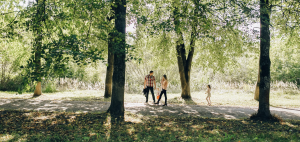
Spending more time outdoors does not have to mean planning a hike, taking a day trip, or setting aside an entire afternoon. Often, the easiest way to be outside more is simply to move a few everyday activities outdoors whenever the weather and your schedule allow it.
I found this became much easier once I stopped thinking of outdoor time as something separate I had to plan. Drinking coffee outside, taking a phone call while walking, or eating lunch away from the desk all count, and those smallermoments are often much easier to repeat than waiting for a free weekend.
Move Everyday Activities Outside
Start with things you already do. Morning coffee or tea can be taken onto a balcony, porch, garden step, or nearby outdoor seating area. If you are reading a book, making a personal phone call, or looking through printed documents, those activities can often move outside too. Lunch is another easy opportunity. On days when the weather is comfortable, eating outside instead of at your desk can create a natural break without taking extra time out of the day.
This works best when there is almost no extra preparation involved. If going outside means packing a bag, driving somewhere, and planning the whole thing, it becomes much easier to put off. Keeping it simple makes it more likely to actually happen.
Add a Short Walk to the Day
A walk does not need to be long to give you a reason to step outside. You could walk around the block after lunch, take a slightly longer route home, or go outside for a few minutes after finishing work. If you already have a regular phone call with a friend or family member, that can also be a good moment to walk.
Some days there may only be time for ten minutes, and that is still easier to fit into a normal routine than waiting for an entire free hour. The point is not to make every walk feel like a workout, but simply to create more natural moments outside.
Make Outdoor Time Part of Your Errands
Errands can also be a simple way to spend more time outside. If there is a local market, garden center, high street, or outdoor shopping area nearby, choosing that over an indoor alternative occasionally can turn a normal task into some extra outdoor time. Walking between a few nearby errands instead of driving from door to door can work too, as long as the route is practical.
I like this approach because it does not require adding another activity to the day. You are simply changing how you do something that already needed to happen.
Use Your Own Outdoor Space More Often
If you have a balcony, patio, porch, or garden, it is easy to forget to actually use it. A chair, small table, or comfortable spot can make a big difference, and you do not need to create a perfect outdoor setup. Sometimes having somewhere convenient to sit is enough to make you choose outside over the sofa.
You could drink your first coffee there, read for a few minutes, water plants, or simply sit outside while planning the day.Once the space feels easy to use, it tends to become part of the routine naturally.
If You Do Not Have a Garden or Balcony
You can still build more outdoor time into your routine even if you live in an apartment or do not have private outdoor space. A nearby bench, courtyard, quiet street, public square, or small park can work just as well. Sometimes the easiest option is simply stepping outside your building for a few minutes before or after another task.
If you work from home, even walking around the block between two work sessions can create a clear change of setting without needing a long break. The goal is not to find the perfect outdoor space, but to make going outside easy enough that you are more likely to do it.
Explore Nearby Green Spaces
You do not always need to travel far to find somewhere pleasant to spend time outside. A neighborhood park, walking path, public garden, riverside path, or quiet residential route may be closer than you think. It can be useful to have one or two easy places in mind for days when you want to go outside but do not feel like planning anything.
The places I return to most are usually not the most impressive ones. They are simply the ones that are easy to reach without turning the outing into a whole project.
Make Evenings a Little More Outdoor-Friendly
Evenings can disappear quickly into television, phones, and household tasks. On days when the weather is pleasant, try taking part of that downtime outside. A short walk after dinner, sitting outside with a drink, or spending a few minutes on the balcony can be enough.
There is no need to replace your entire evening routine. Even shifting the first 15 or 20 minutes outdoors can make the end of the day feel a little different.
Adjust Your Routine With the Seasons
Outdoor habits may naturally change throughout the year. In summer, early mornings or later evenings may feel more comfortable than the middle of the day. During colder months, shorter walks or outdoor errands can be easier to maintain than sitting outside for long periods.
It can help to adapt the activity rather than abandon the habit completely. A longer evening walk in summer might become a quick lunchtime walk in winter, while outdoor coffee might move from the garden to a short stop on a nearby bench. Keeping the routine flexible makes it easier to continue when the weather and daylight change.
Do Not Wait for Perfect Weather
It is easy to assume outdoor time only counts when the weather is warm and sunny, but cooler or cloudy days can still be perfectly practical with the right clothing. A light jacket, umbrella, or extra layer can make a short walk much more manageable.
Of course, there is no reason to force yourself outside in unpleasant or unsafe weather. The idea is simply not to dismiss an entire day because it is not picture-perfect.
Keep It Simple
The easiest way to spend more time outdoors is usually to avoid making it another task on your schedule. Take something you already do and move it outside, whether that is drinking coffee, walking during a phone call, eating lunch outdoors, or choosing an outdoor route for an errand.
For me, that small shift in thinking made the biggest difference. Once outdoor time stopped needing a special plan, it became much easier to fit naturally into everyday life.