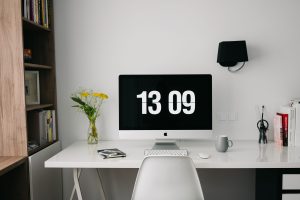
Working from home is much easier when your workspace feels calm and organized. The problem is that a small home office can become cluttered very quickly, especially when your desk also has to hold a computer, notebooks, chargers, paperwork, and all the other little things that seem to collect during the week.
You do not need a large room or expensive furniture to make a small workspace work well. In my experience, the biggest difference usually comes from keeping the desk itself simple and giving everything else a clear place to go. A few practical changes can make even a compact desk, corner, or spare nook feel much more usable. Here are a few ways to organize a small home office without making it feel crowded.
Start With the Desk Surface
Your desk is the part of the office you use most, so it is a good place to begin. I like to keep only the things I use regularly within easy reach, such as a computer, notebook, pen, and perhaps a drink.
Items you only use occasionally, like spare stationery, reference books, extra cables, or old notes, can usually be moved into a drawer, storage box, or nearby shelf. This gives you more room to actually work instead of constantly shifting things around.
A quick desk reset at the end of the day can also help. Putting away loose papers, removing cups, and throwing away small bits of rubbish only takes a couple of minutes, but it makes the space feel much better the next morning.
Make Use of Vertical Space
When floor and desk space are limited, the walls can be surprisingly useful. A simple floating shelf above the desk can hold books, storage boxes, or items you do not need every day.
I would avoid filling the whole wall immediately, though. Too many shelves and organizers can make a small workspace feel just as busy as a cluttered desk. Starting with one shelf or a small pegboard is usually enough to see what you actually use.
A monitor riser can also be useful. Raising the screen slightly creates extra space underneath for a keyboard, notebook, or other small items without taking up additional floor space.
Tidy Up the Cables
Cables are one of those things that can make a workspace look messy even when everything else is organized. Before buying cable organizers, I would first check which cords you actually still need. Old chargers and unused adapters have a habit of staying under desks for months.
Reusable cable ties are useful for grouping wires together, while an under-desk tray can keep a power strip and larger adapters off the floor. Labeling similar-looking chargers can also save time later.
You do not need to hide every cable completely. Simply keeping them together and out of the way is often enough to make the whole desk area look calmer.
Give Paperwork a Clear Place
Even in a mostly digital workspace, paper has a habit of appearing. Bills, notes, receipts, letters, and printed documents can quickly take over a small desk if there is no clear system for them.
A simple tray or file holder is often enough. I usually find that just a few categories work better than an elaborate filing system, for example papers that still need attention, documents that need filing, and things that can be recycled.
If you prefer storing documents digitally, scanning important paperwork can reduce the amount you need to keep physically. Just make sure the files are stored somewhere logical enough that you can actually find them again.
Keep Frequently Used Items Close
The easiest way to organize a small office is to base it around what you actually use. If you reach for headphones every day, give them a hook near the desk. If you are constantly looking for a pen, keep a small holder within reach.
Less frequently used items can go farther away. This sounds obvious, but it is easy to organize a workspace based on what looks neat rather than what is practical.
For me, a good setup is one where I can sit down and start working without opening three drawers or moving several things first.
Keep the Space Simple
A small home office does not need to look perfectly styled to work well. In fact, trying to fit too much storage, decoration, and equipment into a limited area can make it feel even smaller.
Start by clearing the desk, use the wall space where it genuinely helps, keep cables under control, and give paperwork a simple home. From there, add or remove storage based on what you actually use.
The best organization system is usually not the most elaborate one. It is the one that makes the space easy to use every day.